

What to do in Sorrento (and why it’s the best base for Capri and the Amalfi Coast)
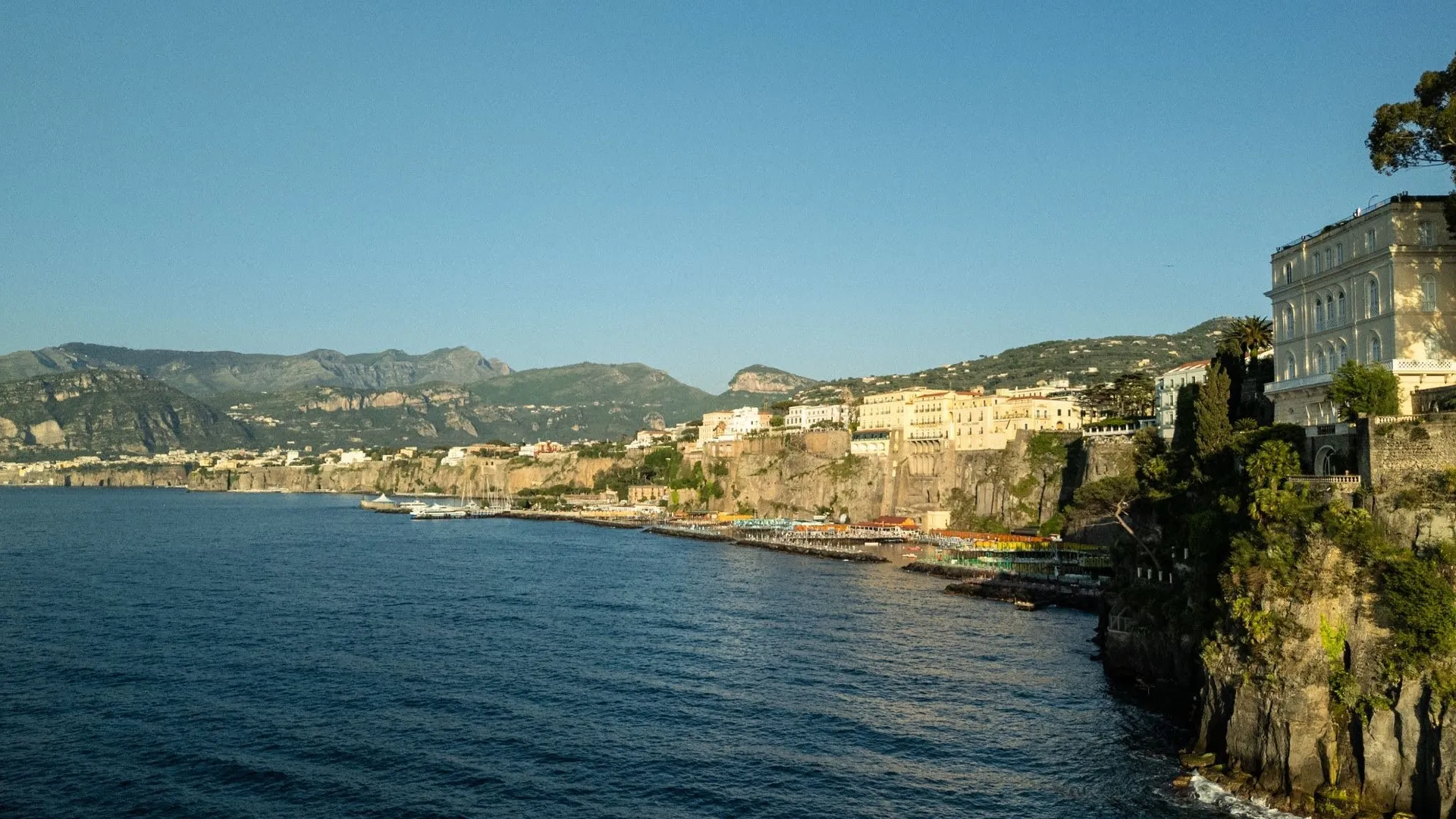
What to do in Sorrento is one of those questions that changes meaning once you’re actually here. You arrive expecting a list of sights. Then the first morning happens.
Coffee at a table outside in Piazza Tasso, the smell of lemon groves drifting down from somewhere above the rooftops, the sound of the port already moving two hundred meters below the cliff.
And you understand that Sorrento works differently from other places.
It’s not a destination you tick off. It’s where your days take shape.
In this article:
- Is Sorrento a good base for Capri and the Amalfi Coast?
- Where do boats leave from in Sorrento?
- What does Sorrento city look like when you actually walk it?
- What a day starting from Sorrento porto actually looks like
- Planning your days: one base, multiple destinations
- Sorrento after dark: where the evening actually goes
Is Sorrento a good base for Capri and the Amalfi Coast?
Sorrento is the best base for Capri and the Amalfi Coast, and not just because of geography.
Yes, the distances work:
- Capri is nine nautical miles away, reachable in under forty minutes by private boat
- Positano is less than an hour by sea
- Amalfi sits on the other side of the peninsula, close enough to visit and return in a single day
- Pompeii is forty minutes by train from Sorrento’s central station
- Naples is one hour by train, with ferries running regularly from the port
But the real reason is structural. From Sorrento, the journey to any of these places becomes part of the experience rather than a necessary inconvenience.
You leave from a port that’s a short walk from the town center. You move along a coastline that is already worth watching.
By the time you arrive somewhere, you’ve already been on the water for a while, and the day has its own rhythm.
That’s something you can’t replicate if you’re based in Naples, where the logistics of getting anywhere consume the morning.
With Sorrento Sea Tours, the departure point is always Marina Piccola.
Which means the Sorrentine coastline, with everything it holds, is already part of your day before Capri or the Amalfi Coast even begins.
Where do boats leave from in Sorrento?
Everything revolves around Sorrento porto, specifically Marina Piccola.
The port sits at the base of the cliffs on which Sorrento is built, at the mouth of the Valley of the Mills.
To reach it from the town center you have two options:
- Walk down the steep steps of Via Luigi di Maio from Piazza Tasso (about ten minutes on foot)
- Go through the Villa Comunale park and take the lift down for about one euro
In the morning, Marina Piccola has a particular quality. The ferries are loading. The private boats are being prepared.
The Sorrento Sea Tours boarding office is open next to the tobacco shop, where the day’s groups gather at nine o’clock for the briefing before the 9:30 departure.
By afternoon, the port feels completely different. Quieter, slower. People coming back from a full day at sea, the light on the cliffs at an angle that didn’t exist this morning.
You don’t visit Marina Piccola as a tourist attraction. You pass through it, and within a day or two it becomes part of your routine.
From here, boats depart for Capri, Positano, and the Amalfi Coast. The shared tours leave on a fixed schedule.
The private experiences depart when you’re ready, with a schedule that adjusts to the day.
What does Sorrento city look like when you actually walk it?
Understanding what to do in Sorrento starts with understanding the town itself. It’s built on a plateau of tufa rock, surrounded by cliffs that drop straight to the sea.
That geography shapes everything, from the way the streets are laid out to the viewpoints that appear when you’re not looking for them.
Piazza Tasso is the center of everything. It’s built above a deep gorge, the Vallone dei Mulini.
Walk thirty seconds off the square toward Viale Enrico Caruso and you can look down into the ravine where thirteenth-century flour mills still stand, half-swallowed by vegetation.
From Piazza Tasso, the streets spread in different directions:
- Corso Italia runs east, broad and tree-lined, past the cathedral and the boutiques where locals actually shop
- Via San Cesareo runs west, narrower and more chaotic, packed with ceramics, leather goods, and limoncello shops where you can taste before you buy
- Via Luigi di Maio leads north toward the cloister of San Francesco, a fourteenth-century Franciscan complex with an Arab-Norman portico worth the detour.
For those who want to go deeper into the town’s history, two museums are worth the time.
The Museo della Tarsia Lignea on Via San Nicola documents centuries of Sorrento’s inlaid woodworking tradition, an artform that made the town famous across Europe long before tourism arrived.
The Museo Correale di Terranova, set in an eighteenth-century villa above the sea, holds archaeological finds, paintings and decorative arts connected to the Neapolitan aristocracy.
For something more sensory, the Giardini di Cataldo with two entrances, one from Via Corso Italia and the other one is in Via Correale, is one of the few working lemon groves still open to visitors.
The trees are over a hundred years old, the smell of citrus is in the air at every hour of the day, and the walk through the grove feels completely removed from the tourist circuit two streets away.
Then there’s the Villa Comunale, the public garden at the edge of the cliff. The view from there, the Bay of Naples, Vesuvius on the horizon, Capri visible on clear days, is the best free thing in Sorrento.
What a day starting from Sorrento porto actually looks like
A day that begins at Marina Piccola doesn’t start at the destination. It starts before.
The boat leaves the harbor and moves along the peninsula. The coastline that appears in the first thirty minutes includes:
- Marina Grande, Sorrento’s older fishing port, with restaurants that hang over the water
- Massa Lubrense, where the houses thin out and the cliffs take over
- The Cascatella, a small natural waterfall that drops into the sea with no road near it
- Punta Campanella, the western tip of the peninsula, where the Gulf of Naples meets the Gulf of Salerno
At Punta Campanella the water is inside a marine reserve. Below the surface at Scoglio del Vervece, at twelve meters depth, there’s a submerged statue of the Madonna placed to mark one of Enzo Maiorca’s historic freediving records.
Most people pass over it without knowing.
Then Capri appears on the horizon, or the Amalfi Coast opens to the south. Either way, you arrive differently than you would from a ferry.
For a closer look at what the crossing to Capri actually involves, hour by hour: Sorrento to Capri boat tour: what really happens during the day
Planning your days: one base, multiple destinations
Staying in Sorrento makes planning straightforward without making it rigid.
A typical structure might look like this:
- Day one: Capri. The island circuit, the grottos, four hours on land with time to reach Anacapri, the swim stop on return, the limoncello at the Bagno della Regina Giovanna
- Day two: Amalfi Coast. Positano in the morning, Praiano, the Fiordo di Furore, Amalfi in the afternoon, the Bay of Dreams and the Fisherman’s Grotto on the way back
- One evening: the Sunset Sorrento Coast Tour, two hours along the coastline in the last light of the day. It works especially well at the end of a day already spent elsewhere — after a visit to Pompeii, a cooking class in the hills above Sorrento, or a guided walking tour of the historic center. The sea at that hour looks nothing like it did at 9:30.
Both main routes leave from the same point and return to the same point. The logistics never compete with the experience.
For a full overview of what’s available: Shared Tours and Private Experiences on the Sorrento Sea Tours website.
Sorrento after dark: where the evening actually goes
The town changes at sunset. The traffic thins, the streets pedestrianize, and the terraces above the bay fill with people in no particular hurry to be anywhere else.
For an aperitivo with a view, the options worth knowing are mostly hidden inside hotel properties rather than signposted on the main street.
The Grand Hotel Excelsior Vittoria has been on the cliff above Marina Piccola since 1834. It was on this terrace that Lucio Dalla composed the song Caruso, looking out at the same Vesuvius and the same bay that exist today. The bar is accessible to non-guests with a reservation.
The Terrazza Vittoria at the Grand Hotel Continental on Piazza della Vittoria is a different address entirely — open to the public without a reservation, with aperitivo service and live music on selected evenings.
The Villa Pompeiana at Hotel Bellevue Syrene sits lower on the cliff, directly above the sea, quieter and more private than either of the above.
The Terrazza dell’Hotel Loreley and the Terrazza dell’Hotel La Minervetta are smaller and less known, worth finding for exactly that reason. The rooftop of Hotel Ara Maris is one of the newer panoramic terraces in the center, with a full arc of the bay visible from the top.
La Favorita and Il Continental offer sea-view aperitivo at a more accessible register, easier to walk into without planning ahead.
For dinner, Sorrento has more depth than the main street suggests.
Il Buco on Rampa Marina Piccola has held a Michelin star since 2004.
Chef Peppe Aversa works in the cellars of a sixteenth-century monastery — stone vaulted ceilings, over 1,600 wine labels, and a menu that moves between Campanian tradition and something more personal.
Pasta di Gragnano with lobster, crudo di mare, a dessert selection that tends to stay in the memory. Il Delfino sits on the sea at Marina Grande with a seafood menu and a terrace that catches the evening light well.
Il Parrucchiano on Corso Italia has been open since 1893, housed in a former greenhouse with a glass ceiling through which you can see the sky. Vrasa and Il Caruso complete the list, both worth a reservation for those who want to eat well without the Michelin ceremony.
The combination — the sea in the morning, the town at night — is what makes Sorrento work as a base in a way that no other starting point on this coast quite manages.